From Theory to Practical
First written in 2021. Ghanaians know what we want for our country, and the harder question is how we finally get it.
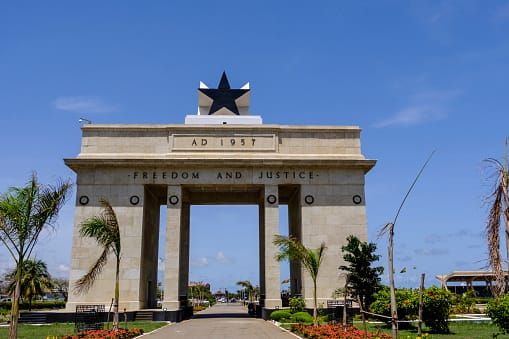
A call to every Ghanaian, home and abroad
Ghanaians have always been a proud people. We love our country, and we are quick to say “Ghana” whenever anyone asks where we're from. At home, we are our own harshest critics when it comes to our development and our reputation abroad. We believe, passionately, that Ghana should stand alongside developed nations socially, economically, and in governance. Ghana is only 69 years old, compared with roughly 250 for the United States and far longer for many European countries. Still, when we look at how fast China, Malaysia, and Dubai have developed over the last 40 years, we can't help but think: it should be us too.
Social media movements like “Kumerica” and “Fix the Country” make one thing clear: Ghanaians are not settling for being just one of the good countries in Africa. We want to compete with the world. We want urban life, with paved roads leading straight to homes powered 24 hours a day, seven days a week. We want skyscrapers with modern sewage systems running beneath them. We want to sit beside unpolluted rivers and streams with friends, sharing wine and good meals. We want to travel to London, New York, Sydney, or Dubai not to labor, but to visit for a few weeks and return home to our families in Ghana. We want to end corruption and the abuse of power. We want a fair system with equal access to wealth, world-class education, and quality health care. This is the voice of every Ghanaian, not just the rich and the diplomats.
None of this is new. We have wanted these things since Nkrumah declared independence. So what's different this time? How do we finally fix the country? Fortunately, this generation has an advantage: globalization and technology, combined with the foundation and education our forebears worked to provide, mean Ghanaians can now compete with the world. Development, from Bolgatanga to Accra, is within reach. But we won't seize that opportunity until we move past talking theoretically and start acting practically. As the saying goes, actions speak louder than words.
Nowhere is our struggle to move from theory to practice more visible than in our relationship with the mosquito and the malaria it carries. Back in primary school, our science teacher taught us how important it is to keep our environment clean: a contaminated environment attracts pests like mosquitoes, and those pests spread malaria and other diseases. Despite that early lesson, the small gutters, the oversized gutters, the stagnant polluted water, and the refuse dumps kept tracing a line from our schools into our neighborhoods, next to the food we bought, beside the playgrounds where we played, right behind the windows where we slept. I had malaria myself, and so did many of my classmates. Yet every year the gutters grew thicker and the refuse dumps grew larger. It raised questions: was every other student around town learning what our teacher taught us? Did the adults learn it too, back when they were in school? Why wasn't anyone acting on it? The only answer I ever got, including from teachers, was that “it's easier said than done.”
And yet, when Ghana has truly acted on malaria, it has worked. According to Ghana's own health reporting, malaria deaths fell from more than 2,000 a decade ago to fewer than 300 in 2024, and the share of people carrying the malaria parasite dropped from 28 percent in 2011 to about 9 percent in 2022. That is what practice looks like: a sustained national effort, not just a lesson in a classroom. But the gutters and refuse dumps are still with us, and Ghana still has a real sewage problem that needs urgent attention. Sanitizing our neighborhoods isn't only the government's job while we wait for better infrastructure; it's the responsibility of every Ghanaian on the street. The solution starts with applying the knowledge we already have, whether or not anyone is watching.
In that same spirit of shared responsibility, we need to move from theory to practice in the political relationship between the people and the government, a relationship that shapes our development more than almost anything else. Theoretically, Ghana is a democratic republic: the government's power rests on the will of the people. In practice, the people and the government are bound together by the constitution to develop the country together, and neither can succeed when their agendas conflict. Citizens have a responsibility to set aside personal interests and elect capable leaders who have Ghana's best interests at heart, just as elected officials have a duty to use their power in the people's interest. In that sense, capable citizens must be willing to compete for power and seek a role in government. As the Ghanaian proverb goes: “When the elders sit and watch children eat a python, they are not left out when the python eaters are counted.”
The relationship between the government and the people doesn't end on election night. The people must hold public officials accountable, through letters, protests, strikes, and every form of nonviolent action available when government strays off course. The government, in turn, must listen and create common ground that returns people to productivity rather than to the streets. We saw the public's voice at work in 2021, when Ghanaians spoke up loudly about the 90-day jail sentence handed to the entertainer Akuapem Poloo. She was released on bail days later, and her case went to appeal.
If we apply this same civic instinct across every part of Ghanaian life, we get the rapid development we're after. We have to replace “it's easier said than done” with “actions speak louder than words” and “we can achieve anything we put our minds to.” This is a call to all Ghanaians, home and abroad: those in power and those on the ground, teachers and students, engineers and architects, journalists and detectives, artists and entrepreneurs, corporations and street vendors. It's time to go to work. We are moving from theory to practice. To adapt President John F. Kennedy's words: my fellow citizens, ask not what your country can do for you, ask what you can do for Ghana.